Queer Places:
Smith College (Seven Sisters), 9 Elm St, Northampton, MA 01063
Gropius House, 68 Baker Bridge Rd, Lincoln, MA 01773, United States
Storrowton Village Museum, 1305 Memorial Ave Gate 1, West Springfield, MA 01089, United States
Lincoln Cemetery, 44 Lexington Rd, Lincoln, MA 01773, United States
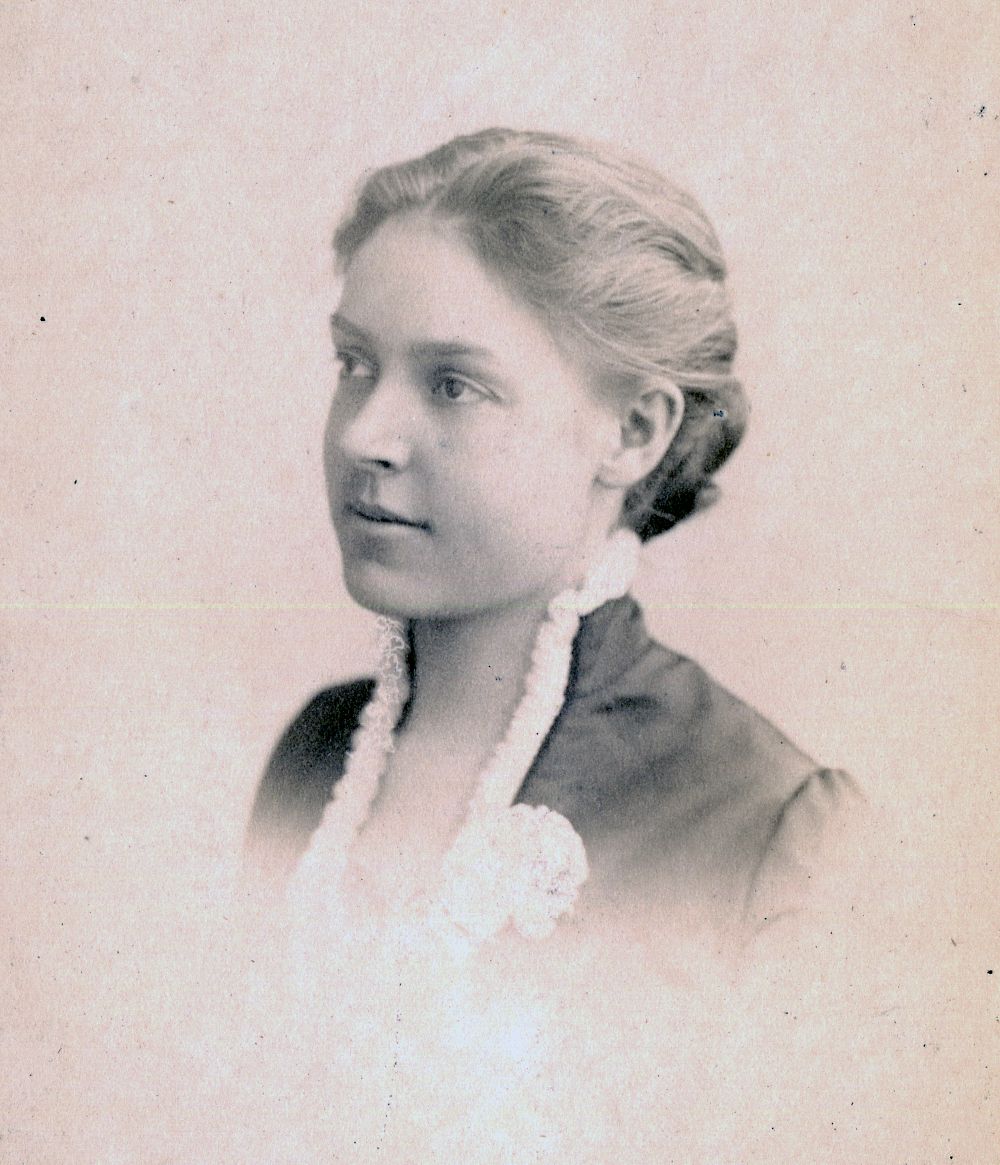 Helen Osborne Storrow (September 22, 1864 – November 12, 1944) was born on September 22, 1864, in Auburn, New York, as the youngest of four children born
to David Munson "Munson" Osborne and Eliza Wright. Her father made a fortune manufacturing agricultural machinery through D. M. Osborne & Co. and served
three terms as mayor of Auburn, while her mother came from a staunchly abolitionist family with deep Quaker roots. Helen's maternal grandparents, David and
Martha Coffin Wright, were loyal friends of Harriet Tubman, and her grandmother Martha helped organize the first women's rights convention at Seneca Falls
in 1848, alongside her sister Lucretia Coffin Mott. Helen's home environment was regularly visited by prominent reformers such as Frederick Douglass,
Elizabeth Cady Stanton, Susan B. Anthony, and
Anna Howard Shaw, instilling in her early progressive values.
Helen Osborne Storrow (September 22, 1864 – November 12, 1944) was born on September 22, 1864, in Auburn, New York, as the youngest of four children born
to David Munson "Munson" Osborne and Eliza Wright. Her father made a fortune manufacturing agricultural machinery through D. M. Osborne & Co. and served
three terms as mayor of Auburn, while her mother came from a staunchly abolitionist family with deep Quaker roots. Helen's maternal grandparents, David and
Martha Coffin Wright, were loyal friends of Harriet Tubman, and her grandmother Martha helped organize the first women's rights convention at Seneca Falls
in 1848, alongside her sister Lucretia Coffin Mott. Helen's home environment was regularly visited by prominent reformers such as Frederick Douglass,
Elizabeth Cady Stanton, Susan B. Anthony, and
Anna Howard Shaw, instilling in her early progressive values.
Helen enjoyed a privileged upbringing attending private schools, traveling through Europe, and spending summers at Owasco Lake. She attended Catherine
L. Howard’s Boarding School in Springfield, Massachusetts, spent time in Germany studying music, and graduated from Smith College. In 1882, while touring
Europe, she met James Jackson Storrow Sr., whom she married in 1891 after a lengthy engagement. James became a prominent Boston investment banker at Lee,
Higginson & Co., a corporate leader, and a social progressive who served as the second national president of the Boy Scouts of America. Though they longed
for a large family, they had only one son, James Jackson Storrow Jr., but extended their roles as aunt and uncle to numerous young companions and guests at
their country home in Lincoln. Notably, one cause Helen never actively championed was women's suffrage, most likely because her husband was opposed to
it.
Deeply committed to social reform, Helen focused her early philanthropic efforts on child welfare, playground construction, and the settlement house
movement in Boston. She joined the board of managers of the North Bennet Street Industrial School in 1898, where she met
Edith Guerrier. Through her connection with Guerrier and the Saturday Evening Girls' Club, Helen became an
enthusiastic financial patron and supporter of working-class immigrant women in the North End, also providing them with a summer residence in Gloucester.
In 1906, she funded a European trip for Guerrier and her partner, Edith Brown, during which the two women
conceived the idea for a pottery enterprise. Helen subsequently subsidized the Paul Revere Pottery, purchasing a townhouse on Hull Street and later funding
a custom two-story workshop and residential building for the couple on Nottingham Hill in Brighton. Expanding her community outreach, she and her husband
helped found the West End House in 1903 as a club and settlement house for boys—primarily immigrants—providing educational classes, physical education, and
athletic programs like neighborhood Thanksgiving Day races, alongside establishing a summer camp for them in Maine in 1908. James also helped found the
Boston Newsboy's Club in 1909 to befriend and support the city's newsboys.
Frustrated by the monotony of traditional women's clubs, Helen founded the Women's City Club in 1913 to promote broader civic engagement and discussion
among women from diverse socio-economic backgrounds, serving as its first president. During World War I, the Storrows supported America's entry, and Helen
presided over the club's War Service Committee to raise funds. At the war's end, they converted their summer residence, Storrow Farm in Lincoln, into a
convalescent hospital for wounded and crippled soldiers. Later in life, influenced by her brother Thomas Mott Osborne's activism, she became interested in
prison reform and founded the Women's Auxiliary of the Tom Brown House in 1930. Dedicated to architectural and historic preservation ahead of her time,
Helen purchased an 18th-century farmhouse and additional antique buildings, investing nearly half a million dollars of her own money between 1927 and 1930
to construct Storrowton Village as the Home Department of the Eastern States Exposition. Furthermore, she and her sister Emily donated a new city hall to
Auburn in 1930 in their father's memory, she funded a Harvard scholarship for students from Bermuda, and she provided a six-acre plot of land and funds in
Lincoln to build the iconic modernist Gropius House for Bauhaus founder Walter Gropius, as well as a neighboring plot for Marcel Breuer.
Beyond her civic projects, Helen's later life was largely defined by her pioneering leadership in the scouting movement and her passion for folk
dancing. Introduced to Juliette Gordon Low in 1915, she began holding Girl Scout training courses, founded the First National Girl Scout Leaders' Training
School at Long Pond in Plymouth, acquired a 76-acre farm for the Massachusetts Girl Scouts, and served as First Vice President of Girl Scouts, Inc. In
1932, she purchased a chalet in Adelboden, Switzerland, which became known as "Our Chalet," the first World Centre of the World Association of Girl Guides
and Girl Scouts (WAGGGS), where annual Helen Storrow Seminars are held and for which she served as Chair of the World Committee. In honor of her birthday
in 1935, 5,000 Girl Scouts contributed to create "Aunt Helen's Herb Garden" at Storrowton. For her extensive dedication, she became one of only three
American women granted the Silver Fish Award by Lady Baden-Powell. A devotee of Cecil Sharp, Helen also helped found the American branch of the English
Folk Dance Society and promoted folk dancing to foster community and break down social barriers. Her most visible financial contribution to Boston was her
support for the Esplanade and the Storrow Memorial Embankment, complemented by a one-million-dollar donation in 1931 to complete the development of the
Charles River Basin. Helen Osborne Storrow died on November 12, 1944, in Lincoln, Massachusetts, and is buried in the Lincoln Cemetery.
Operating within the social circles of fin de siecle Boston, Helen and James maintained deep personal and professional ties with prominent figures,
including same-sex couples, male and female friends, and individuals such as Henry Davis Sleeper and
A. Piatt Andrew. Helen formed an intense bond with Edith Guerrier and Edith Brown, inviting them to stay at
her home while she traveled to Europe, funding their travels, and heavily investing in their personal and professional lives. Despite navigating the era's
prevailing prejudices, her progressive outlook, active patronage of female couples and immigrant women, and close friendships across diverse social strata
defined her legacy as a pillar of Boston's philanthropic and reform movements, widely remembered as "the first lady of Boston."
References:
Other references:
- "Mrs. Storrow dies; Girl Scout leader", The New York Times, November 12, 1944, p. 50.
- John S. Wilson, Scouting Round the World, first edition, Blandford Press, 1959 (p. 86).
- Archival records from the World Association of Girl Guides and Girl Scouts (WAGGGS) regarding the establishment of Our Chalet in Adelboden, Switzerland.
- Storrowton Village Museum & Eastern States Exposition: Historical accounts and virtual exhibits detailing her curation of the Home Department and the preservation architecture of Storrowton Village (compiled by historians such as Dennis Picard and Natalie Richards).
- Boston Women's Heritage Trail: Documentation of her extensive settlement house work, her partnership with Edith Guerrier, the Saturday Evening Girls' Club, and the Paul Revere Pottery.
- Freedom’s Way National Heritage Area: Biographical overviews highlighting her civic contributions, land grants (such as the Gropius House plot), and the Storrow Memorial Embankment.
- "A Friend to All: Helen Storrow", published in The Bermudian Magazine, outlining her international travels, community work, and support for education.
Support this project
This website is a passion project researched, developed, and funded entirely by me. If you find the content valuable and would like to help support the ongoing research and hosting costs, any contribution is deeply appreciated.
Thank you for keeping this independent resource alive!
My books on Amazon: Elisa Rolle's books
BACK TO HOME PAGE